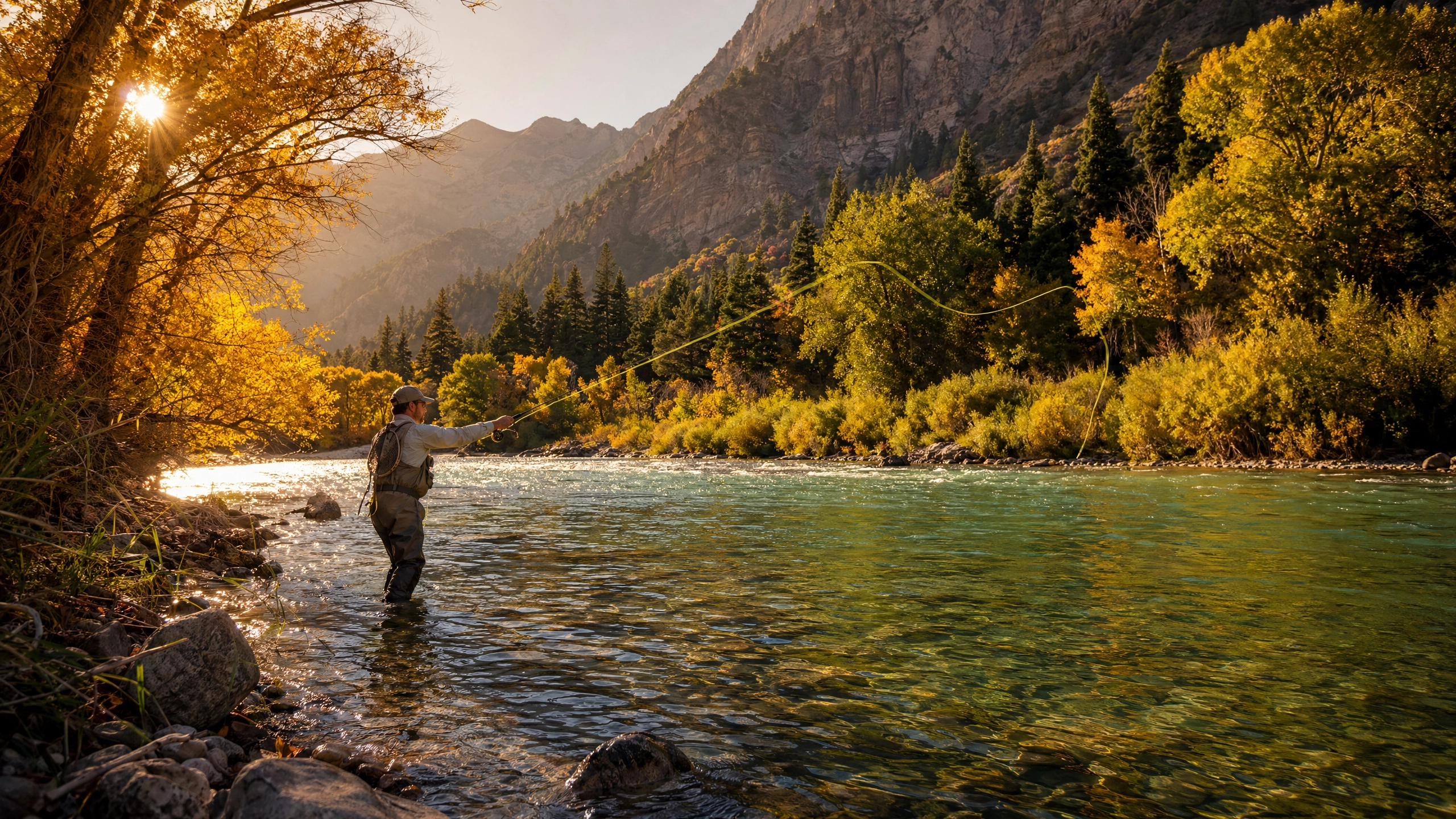
There's a moment in fly fishing that defies description. You're standing thigh-deep in the Provo River, the water so clear you can count the pebbles on the bottom. The canyon walls rise on both sides, catching the last amber light of a September evening. Your line unfurls in a slow arc, the fly settling on the surface with barely a dimple. And then—the take. A brown trout, wild and strong, turning the river to silver as it fights toward the deeper current.
This is what draws more than 100,000 anglers to the Provo River every year. It's one of the premier fly fishing destinations in the American West—a blue-ribbon trout stream that holds wild brown trout exceeding 24 inches and rainbow trout that fight like fish twice their size. The river's cold, clean water, complex structure, and abundant insect hatches create conditions that serious anglers travel thousands of miles to experience.
A River Under Pressure
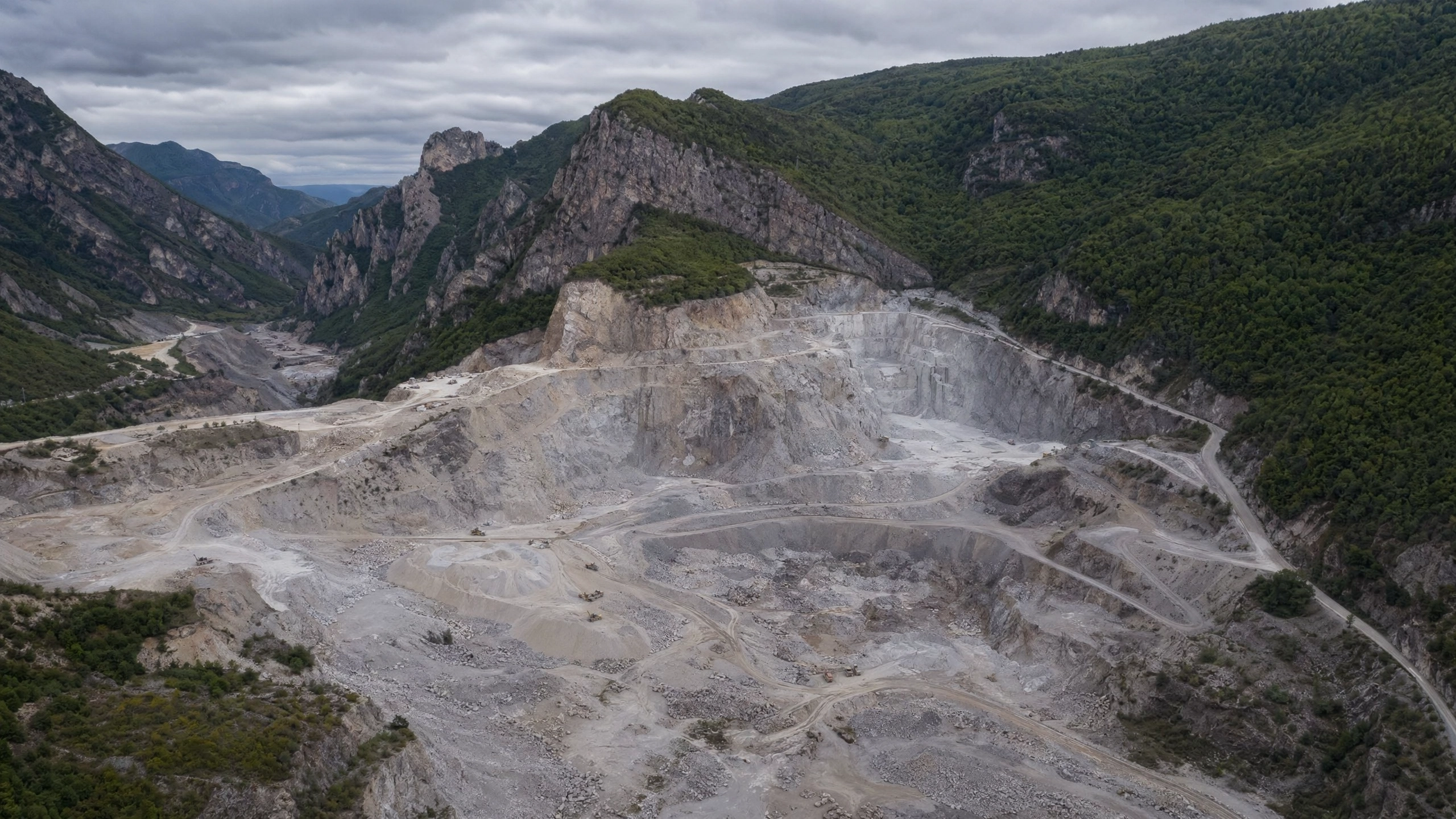
But the Provo River is not immune to the pressures of development and industry. The stretch of river that flows past the quarry site has been quietly degraded for decades. Stormwater runoff from the unreclaimed quarry carries fine sediment into the river—particles so small they remain suspended in the water column, reducing clarity and settling into the gravel substrate where trout deposit their eggs.
Sediment is the silent killer of trout streams. It doesn't poison the water or create visible pollution. Instead, it slowly smothers the spaces between gravel particles where trout eggs incubate, reducing oxygen flow and killing embryos before they hatch. Over time, chronic sedimentation can reduce trout reproduction in affected reaches by 30-50%, even when the river looks perfectly healthy to the casual observer.
"The Provo River doesn't need to be saved—it needs to be protected from the slow, invisible damage that accumulates when we treat the land around it carelessly. Vesper's restoration addresses the source, not just the symptom."
— Vesper Environmental Impact Assessment
The Quarry's Hidden Impact
Most people driving through Provo Canyon see the quarry as an eyesore—an ugly patch of grey in an otherwise green landscape. What they don't see is the hydrological connection between the quarry and the river below. Every rainstorm, every snowmelt event, every windstorm sends material from the quarry's exposed surfaces toward the river. Without vegetation to slow the flow, without topsoil to absorb the moisture, without root systems to hold the hillside in place, the quarry functions as a sediment factory—continuously producing and delivering fine particles to the Provo River watershed.
The quarry also disrupts the riparian corridor—the strip of vegetation along the riverbank that provides shade, bank stability, insect habitat, and thermal regulation. In a healthy canyon, the riparian zone is continuous, creating a green corridor that supports everything from mayfly larvae to great blue herons. The quarry breaks this corridor, creating a gap where the riverbank is exposed, unstable, and ecologically impoverished.
How Vesper Heals the River
Vesper's environmental restoration plan directly addresses every dimension of the quarry's impact on the Provo River. The approach is comprehensive, science-based, and designed to produce measurable improvements in water quality and aquatic habitat.
- Stormwater Management: Bioswales, retention basins, and permeable surfaces capture and filter runoff before it reaches the river, removing sediment and dissolved pollutants.
- Riparian Buffer Restoration: Native cottonwood, willow, and alder will be planted along the riverbank to restore the riparian corridor—providing shade, bank stability, and insect habitat.
- Erosion Control: Revegetation of the quarry slopes with native grasses and shrubs will dramatically reduce the volume of sediment reaching the river during storm events.
- Monitoring Program: Long-term water quality monitoring will track turbidity, sediment load, and macroinvertebrate populations to verify that restoration goals are being met.
The River Walk: Public Access at Last
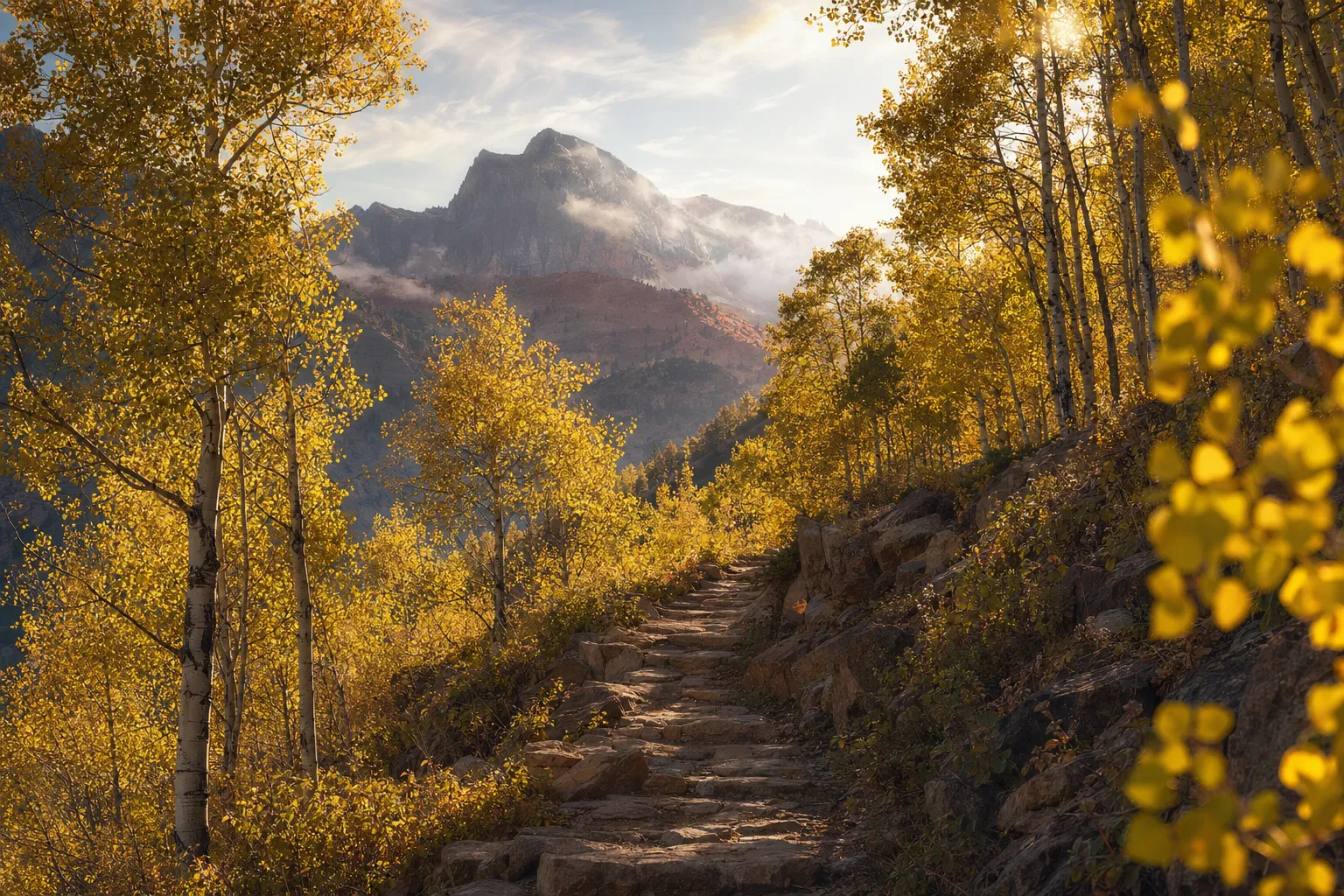
One of the most exciting elements of Vesper's plan for anglers and river lovers is the River Walk—a 3.1-mile trail that will provide the first dedicated public access along this stretch of the Provo River. Currently, reaching the river in this area requires navigating private property, scrambling down unstable banks, or simply giving up and driving to a more accessible stretch.
The River Walk changes that. The trail follows the riverbank through restored riparian habitat, with designated fishing access points, bank stabilization structures that create holding water for trout, and interpretive signs that explain the river's ecology and the restoration work being done to protect it. It's designed for anglers, but it serves everyone—walkers, birdwatchers, families, and anyone who wants to spend time near moving water.
A Hatching Calendar for the Provo
For the fly fishers reading this, here's what makes the Provo River special. The river supports prolific insect hatches throughout the season. Blue-winged olives emerge in March and continue sporadically through November. Mother's Day caddis blanket the river in May. Pale morning duns hatch reliably through June and July. Terrestrial fishing—hoppers, beetles, ants—is exceptional from July through September. And the fall brown trout spawn brings the river's largest fish into shallow water where they can be sight-fished with streamers and nymphs.
This diversity of hatches is directly tied to water quality. Mayflies, caddisflies, and stoneflies are sensitive to sedimentation and pollution—they're the canaries in the coal mine of aquatic health. By reducing sediment input from the quarry, Vesper's restoration will help sustain the insect populations that make the Provo River one of the most productive trout streams in the West.
Fishing and Music: An Unexpected Pairing
There's a natural affinity between fly fishing and live music that anyone who loves both will immediately understand. Both require presence—the ability to be fully in the moment, attuned to subtle rhythms and patterns. Both reward patience and practice. Both are best experienced in beautiful settings with good company. And both create memories that last far longer than the experience itself.
Vesper's location makes it possible to combine these passions in a single trip. Spend the morning on the Provo River, working a dry fly through a riffle as the canyon fills with light. Take the River Walk trail back to the amphitheater in the afternoon. Watch the sunset paint Mount Timpanogos from the terraced seating. And then experience a world-class performance under the stars, in a venue carved from the same canyon that holds the river you fished that morning.
"The Provo River and Vesper Amphitheater share the same canyon, the same watershed, and the same commitment to stewardship. Protecting one means protecting both."
— Vesper Stewardship Team
A Legacy of Clean Water
The Provo River has been a gathering place for thousands of years—first for the Ute people, then for settlers, and now for the millions who visit the canyon annually. It's the lifeblood of the ecosystem, the foundation of a world-class fishery, and a source of drinking water for communities downstream. Protecting it isn't optional—it's a responsibility.
Vesper's restoration represents the most significant investment in Provo River watershed health in decades. By addressing the quarry's chronic sediment contribution, restoring the riparian corridor, and creating public access that builds community investment in the river's future, Vesper is doing more than building an amphitheater. It's building a legacy of clean water, healthy habitat, and responsible stewardship that will benefit the river—and the anglers who love it—for generations to come.
Vesper's River Walk trail includes five designated fishing access points with bank stabilization structures, catch-and-release signage, and interpretive panels about the Provo River's ecology. The trail is free and open year-round.