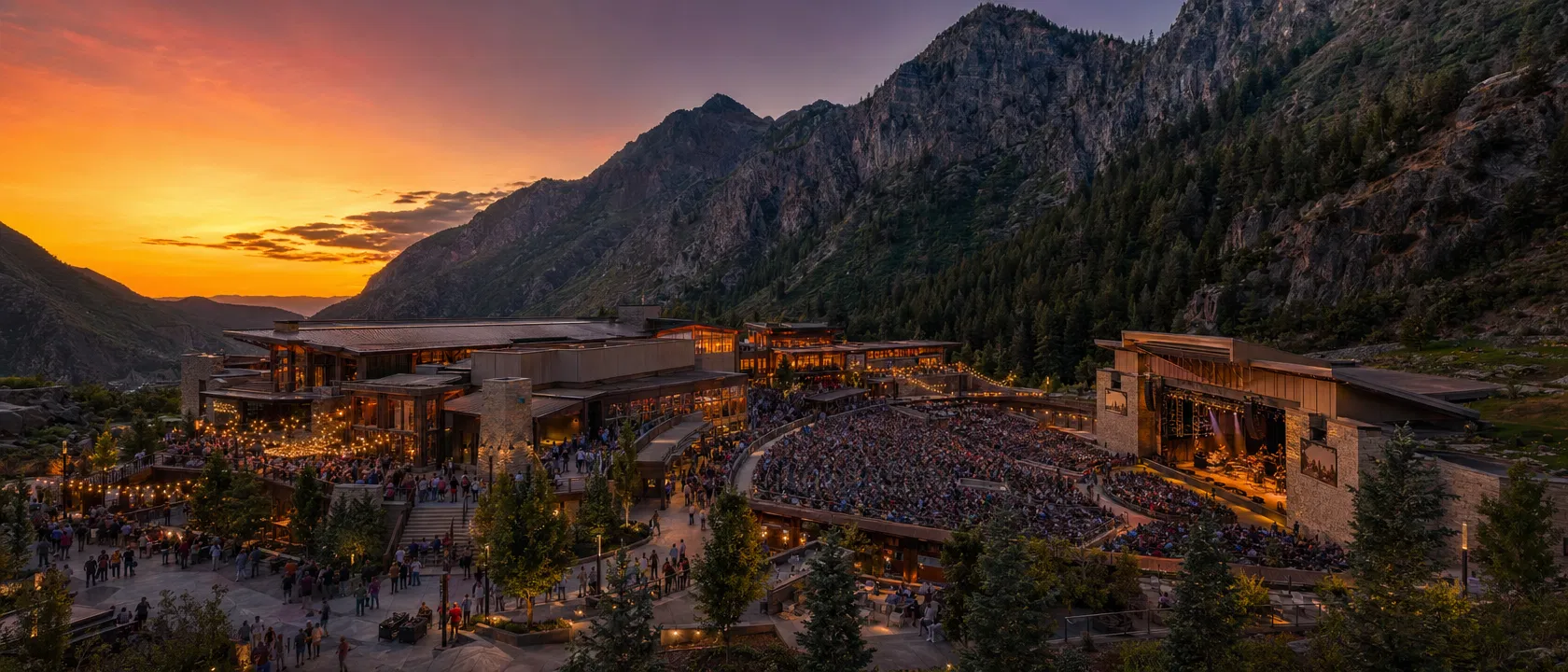
The greatest compliment you can pay to a building in a place like Provo Canyon is to say that it feels like it belongs. Not that it's impressive, not that it's innovative—though Vesper is both—but that it seems to have emerged from the landscape itself, as natural and inevitable as the rock formations that surround it.
This was the guiding principle for Vesper's architectural team from the very first sketch: invisible architecture. Not invisible in the literal sense, but in the way the best mountain architecture works—by deferring to the landscape, by using materials and forms that echo the natural environment, and by creating spaces that frame views rather than blocking them.
Material Honesty
Vesper's material palette was drawn directly from the canyon. Local stone—the same limestone and sandstone that forms the canyon walls—is used throughout the venue's exterior and interior surfaces. The stone isn't decorative veneer; it's structural, load-bearing, and aged to match the weathering patterns of the surrounding geology. Over time, it will develop the same patina as the canyon itself, becoming more integrated with its setting with each passing season.
"Luxury through material honesty, not ornament. Vesper should feel embedded in the mountain rather than imposed upon it."
— Vesper Design Charter
Timber elements—massive Douglas fir beams and columns—provide warmth and scale. The wood is sourced from sustainably managed forests and finished with natural oils that allow it to age gracefully. Bronze hardware and fixtures develop a living patina that changes with the seasons. Glass is used strategically to frame specific views: Mount Timpanogos from the main concourse, the canyon at sunset from the dining terrace, the night sky from the performance bowl.
The Shape-Shifting Stage
Vesper has been described as the world's first shape-shifting amphitheater, and the technology behind this claim is genuinely revolutionary. The stage and seating configuration can be transformed to accommodate everything from intimate 800-person acoustic performances to full 4,500-seat concerts. Moveable architectural elements—walls, canopies, and acoustic panels—allow the venue to adapt to different performance types, weather conditions, and seasonal needs.
In summer, the venue opens fully to the canyon and sky, creating an outdoor experience that connects performers and audiences to the natural world. In winter, enclosed configurations create intimate, climate-controlled spaces for chamber music, talks, and smaller gatherings. The transition between these modes is seamless, managed by systems that are invisible to guests but transformative in their effect.
Framing the View
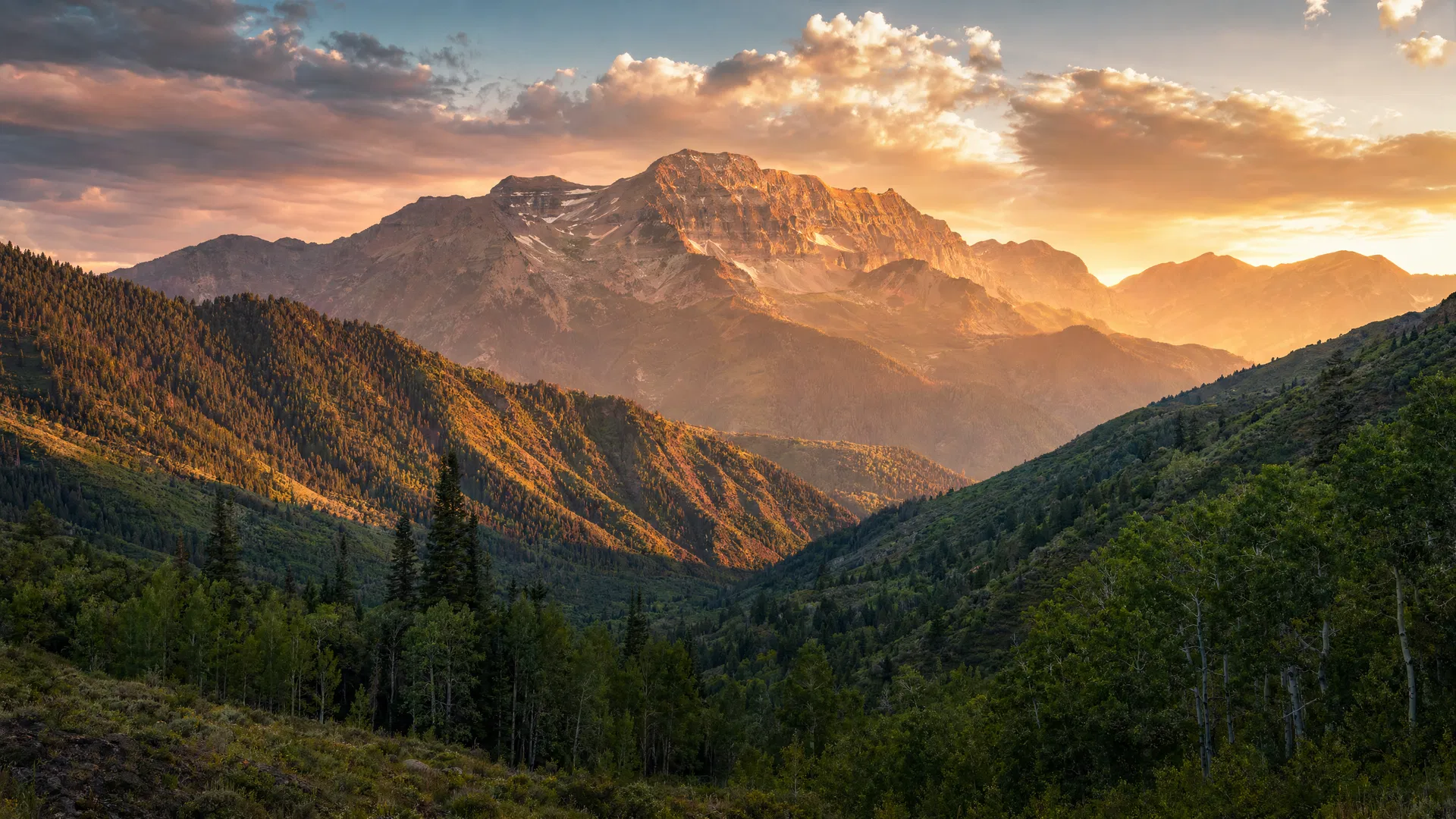
Every seat in Vesper offers a view—not just of the stage, but of the mountain. This was a non-negotiable design requirement that drove the entire seating geometry. The bowl is oriented so that Mount Timpanogos rises behind the stage, creating a natural backdrop that no set designer could improve upon. At sunset, the mountain catches the last light while the canyon below falls into shadow, creating a dramatic transition that coincides with the opening moments of evening performances.
The concourse and gathering spaces are designed with the same attention to views. Terraces step down the hillside, each offering a different perspective on the canyon. The dining areas face west, capturing the full arc of sunset. Even the restrooms—often an afterthought in venue design—feature windows that frame unexpected views of sky and stone.
The architectural vision for Vesper can be summarized in a single principle: the mountain is the main act. Everything we build serves to frame, honor, and connect people to the extraordinary landscape that surrounds them.